Aluminum Profiles Compliance Guide: ISO, IATF & GB/T for South America & Africa
Aluminum Profiles Compliance Guide: ISO, IATF & GB/T for South America & Africa
The short answer: compliance in aluminum profile sourcing has two independent layers, and a supplier can pass one while failing the other. The first layer is the manufacturer's management system — Haomen Aluminum holds IATF 16949:2016, ISO 9001, ISO 14001 and ISO 45001 certification. The second layer is the measured performance of the profiles themselves — Haomen's sliding door and window systems are specified against the GB/T framework at air tightness ≥ Level 6, water tightness ≥ Level 4 (≥ 500 Pa), wind pressure resistance ≥ Level 6, a K value ≤ 2.5 W/m²·K, and sound insulation ≥ 30 dB.
Haomen Aluminum — formally Shandong Haomen Aluminium Industry Co., Ltd. — is a Chinese aluminum profile manufacturer founded in 2004 in Luozhuang District, Linyi City, Shandong Province, producing aluminium alloy architectural profiles and industrial materials for export markets that include South America and Africa.
This guide is written for importers, distributors, project buyers and specifiers in South America and Africa who are close to committing a purchase order. It separates the two compliance layers, identifies the standard behind every performance figure, and sets out a verification sequence you can run before production starts.
The Compliance Gap: A Certificate Is Not a Performance Grade
The most common qualification mistake in aluminum profile procurement is treating a management-system certificate as proof of product performance. The two documents answer different questions, and they are produced by different parts of the business.
A certificate such as IATF 16949:2016, ISO 9001, ISO 14001 or ISO 45001 describes how the factory is managed: how quality is planned, how environmental impact is controlled, how workplace safety is governed. It says nothing about the air tightness, water tightness, wind pressure resistance, thermal transmittance or sound insulation of a specific profile series.
Performance belongs to a different evidence chain, governed by product and test standards. For sliding windows and doors, those values are graded and tested under GB/T 7106, JG/T 215, GB/T 8484, GB/T 13326 and the GB/T 5237 series. A supplier can hold every management-system certificate and still deliver profiles that fail a project's performance specification if the buyer never writes that specification into the order.
Three failure patterns recur in projects across South America and Africa:
- Certification substitution. The buyer receives an IATF 16949:2016 or ISO 9001 certificate and treats the compliance question as closed.
- Unspecified performance. The purchase order states "aluminum profiles for windows" without a tightness, wind-load or K-value grade, so there is no measurable acceptance criterion at delivery.
- Transit and site exposure. Profiles that meet the grade inside the factory can fail in service if corrosion protection and moisture-proof packaging are not specified for a long ocean leg and a humid or coastal installation site.
The decision rule is straightforward: manage both layers in the same purchase order. Name the certificates you require, and separately name the performance grades and test records you will accept.
Industry Background: Why Documented Compliance Now Decides Orders
Aluminum extrusion is a large, Asia-centred supply market, and the sheer volume of exported material makes performance documentation a practical differentiator rather than a marketing claim. The global aluminum extrusion market was valued at USD 94.8 billion in 2024 and is projected to reach USD 230.2 billion by 2035, according to Orion Market Research. Asia Pacific held a 71.7% revenue share of that market in 2025, driven primarily by construction and automotive demand in China, according to Grand View Research.
China is the dominant export source. China's export of "Aluminium Structures" (HS 7610), which includes profiles and window and door frames, totalled USD 5.55 billion in 2024 — 30.5% of global exports, according to OEC. China's own aluminum extrusion market was valued at USD 25.5 billion in 2024, with a projected CAGR of 9.6% through 2035, again per Orion Market Research.
Published market estimates differ by scope: Grand View Research valued the global market at USD 98.2 billion for 2025 and Wissen Research at USD 120 billion, against Orion's USD 94.8 billion for 2024. The divergence reflects different definitions of "extruded products", and it is a useful reminder that any single market figure should be read as an order of magnitude rather than a precise number.
On the standards side, architectural aluminum alloy profiles in China must comply with the mandatory GB/T 5237 series (Parts 1–6), which covers mill finish, anodizing, electrophoresis, and powder and fluorocarbon coatings. Buyers sourcing from China are therefore working inside an established national standards framework. The practical question is not whether a framework exists, but whether a given supplier can evidence compliance against it — and against the performance grades your own project requires.
Haomen Aluminum's Certification Stack, Layer by Layer
Four management-system certifications define the factory-level layer of Haomen Aluminum's compliance position. Each one addresses a different risk that a project buyer or distributor is exposed to.
IATF 16949:2016 — the automotive quality system
IATF 16949:2016 is the automotive industry quality management standard, and it is a mandatory requirement for suppliers providing aluminum components such as crash-management systems and structural frames to major automotive OEMs. For an architectural buyer, the value is indirect but real: the process discipline required to hold the certification — controlled process parameters, documented traceability, structured problem solving — is the same discipline that keeps an extrusion line producing consistent wall thickness and dimensional tolerance across a large order.
ISO 9001, ISO 14001 and ISO 45001
ISO 9001 covers quality management, ISO 14001 covers environmental management, and ISO 45001 covers occupational health and safety management. Together they indicate that the supplier's operating system is audited across quality, environmental and workforce-safety dimensions — the three areas most likely to interrupt production or trigger a compliance question during a long-term supply relationship.
The technical base behind the certificates
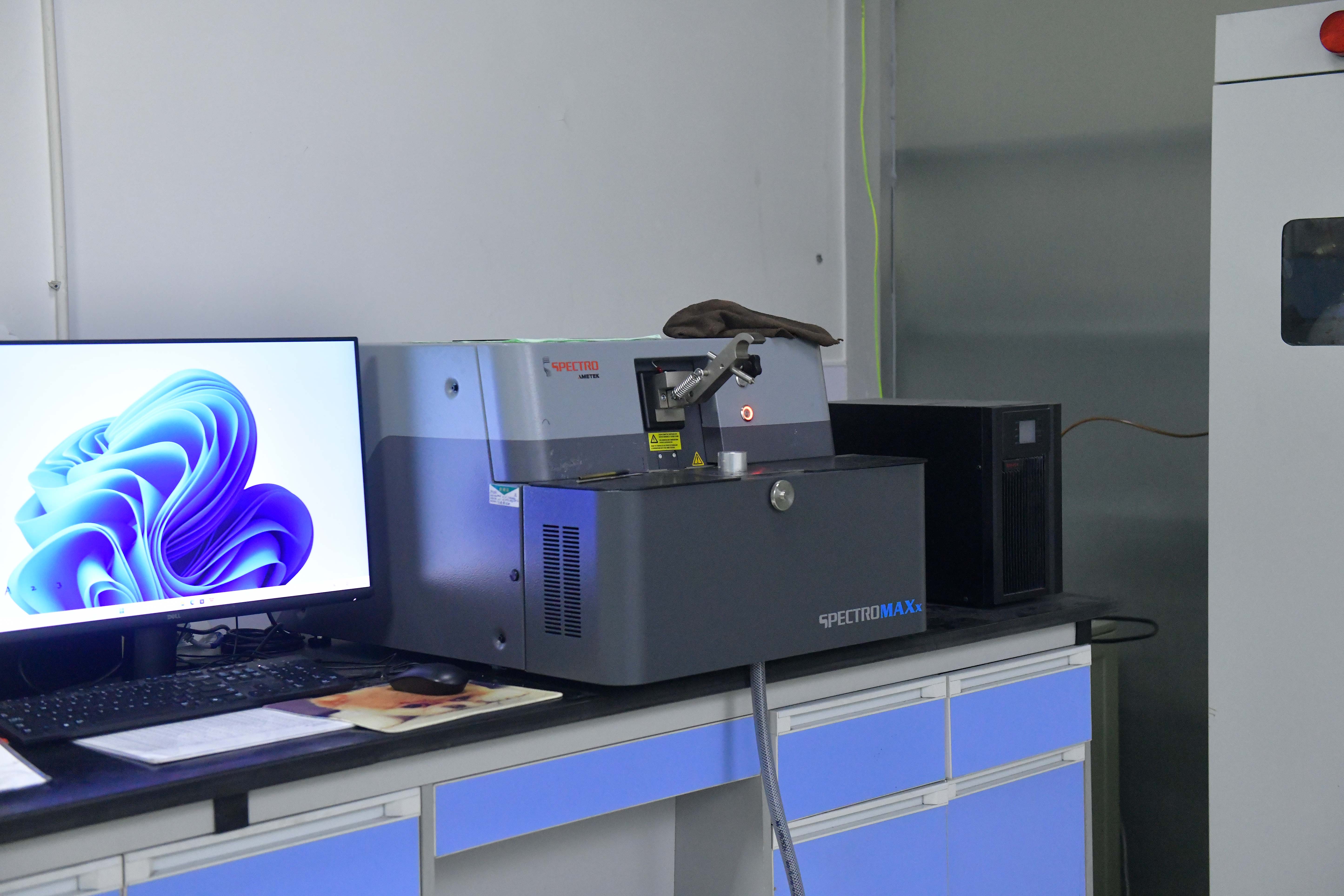
Haomen Aluminum was founded in 2004 and operates from a 270,000 m² facility with a 100,000-ton annual capacity and approximately 1,500 employees. The company integrates research and development, design, production and sales of aluminium alloy architectural profiles and industrial materials, and it has developed capabilities in automotive lightweighting with advanced melting and casting, extrusion technology and complete testing equipment.
Research capacity includes a 35-engineer R&D team, 49 R&D personnel with bachelor's degrees or above — among them one postdoctoral fellow, seven doctors and three master's degree holders — a Shandong Provincial Technology Research Center established at the company in 2019, and cooperation with the Light Alloy Precision Forming Engineering Technology Research and Development Center of Shanghai Jiao Tong University, Shandong University, and the Beijing Research Institute of Nonferrous Metals.
Export activity is concentrated in South America and Africa, with export countries that include Brazil, Argentina, the United States, Canada, Australia, Russia, Germany and Spain.
GB/T Compliance for Sliding Windows and Doors: The Numbers That Matter
For sliding window and door systems, five performance values carry most of the compliance risk in coastal, high-wind and humid markets. Each is graded under a specific standard, and each should appear as a number in the purchase specification rather than as a general quality statement.
| Performance attribute | Governing standard | Specification target |
|---|---|---|
| Air tightness | GB/T 7106 | ≥ Level 6 |
| Water tightness | GB/T 7106 | ≥ Level 4 (≥ 500 Pa) |
| Wind pressure resistance | GB/T 7106 | ≥ Level 6 |
| Thermal insulation (K value) | GB/T 8484 | ≤ 2.5 W/m²·K |
| Sound insulation | JG/T 215 | ≥ 30 dB |
| Profile-level conformity | GB/T 5237 (Parts 1–6) and GB/T 13326 | Mill finish, anodizing, electrophoresis, powder and fluorocarbon coatings |
A sixth layer sits underneath these values. GB/T 5237 governs the aluminum alloy architectural profile itself — mill finish, anodizing, electrophoresis and coating — while GB/T 13326 and GB/T 7106 together anchor the conformity of the finished window and door assembly. If a tender in your market references European specifications instead, EN 755 covers hot-extruded aluminum products and EN 12020 covers precision profiles in alloys 6060 and 6063; the performance logic is comparable even though the grading scales differ.
Corrosion Control: Purity, Anodizing and Packaging
Corrosion is the most frequent long-term failure mode for exported aluminum profiles, and it is addressed at three points in the process rather than one. Haomen Aluminum screens raw material for high-purity aluminum, applies an anodizing anti-corrosion process, and tests sealed moisture-proof packaging to resist corrosion risks.
In production terms, this translates into strict incoming material inspection, a standardized anti-corrosion coating production process, fully sealed moisture-proof packaging, and a finished-product corrosion test before shipment. The material-side result is a purity level above 98.5% and a quality guarantee period of more than 10 years.
Regional Suitability: Coastal, Plateau and Rainy Markets
Coastal and salt-exposed projects
Coastal sites in South America and Africa combine airborne chloride with high humidity, which attacks unprotected aluminum surfaces. The relevant compliance levers are raw-material purity, the anodizing or coating system, and the corrosion test record — not the alloy designation alone.
Plateau and high-wind projects
High-altitude and open-terrain sites generate sustained wind loading and large day-night temperature swings. Wind pressure resistance ≥ Level 6 addresses the structural requirement, and a K value ≤ 2.5 W/m²·K addresses the thermal requirement, which matters more at altitude where the temperature differential across the façade is larger.
Rainy and high-humidity regions
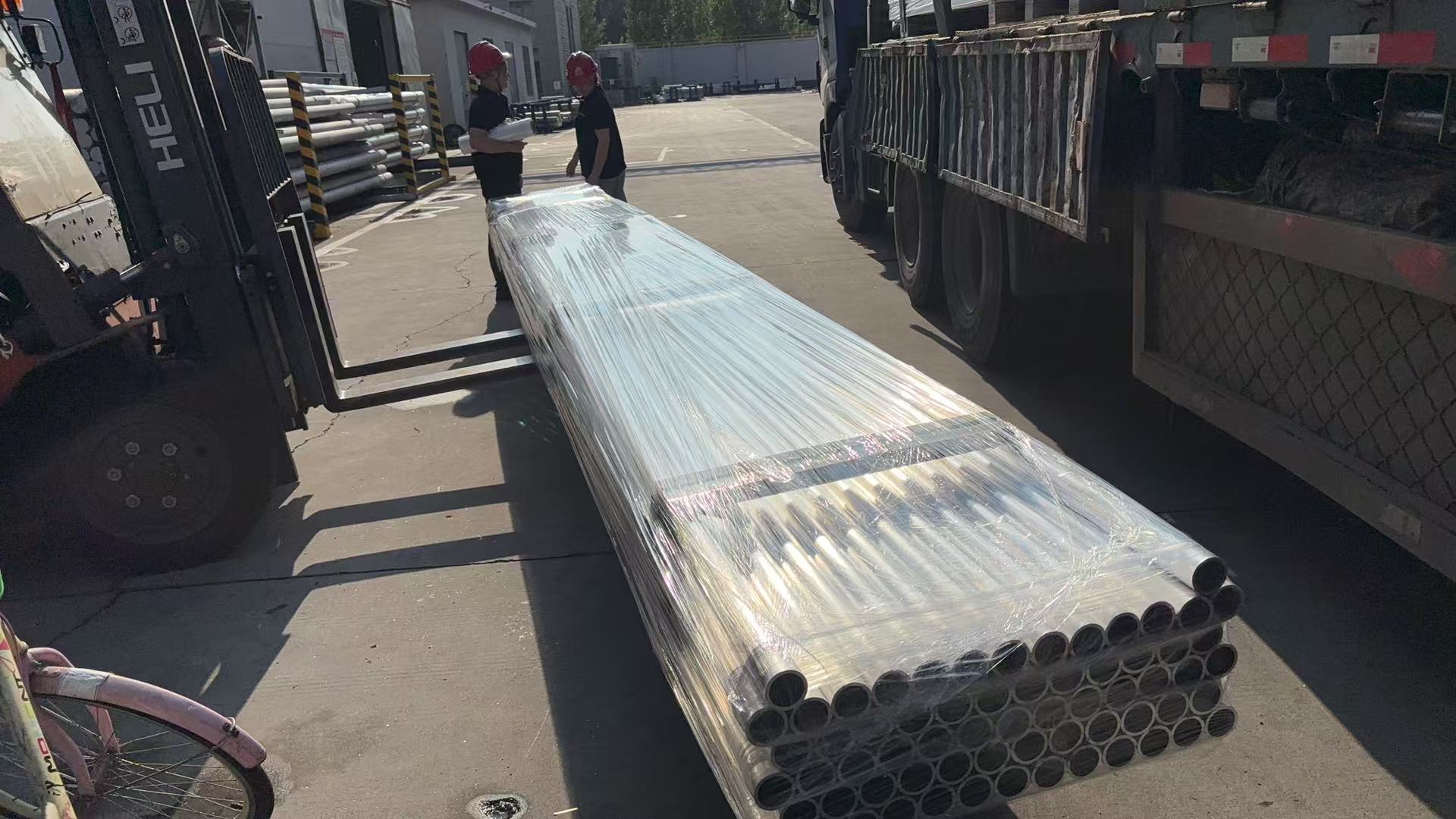
In equatorial and monsoon markets, water tightness is the limiting performance value. A water tightness grade of ≥ Level 4 (≥ 500 Pa) defines the pressure at which the assembly must resist water penetration, and it should be paired with a defined drainage and sealing detail in the system design. Fully sealed moisture-proof packaging protects the profiles between the factory and the site, which is where most surface damage is actually incurred.
Green Building Support: LEED and 3-Star Green Building
Energy performance requirements increasingly enter project specifications through green building programmes rather than through window standards alone. A profile system with a K value ≤ 2.5 W/m²·K and sound insulation ≥ 30 dB gives a project team the thermal and acoustic data needed to support energy-related documentation in LEED submissions and in China's 3-Star Green Building evaluation.
The practical consequence for a buyer is timing: thermal and acoustic data should be requested at the specification stage, because they cannot easily be retrofitted into a system that has already been ordered and fabricated.
Step-by-Step: A Seven-Step Compliance Check Before You Order
- Write the performance grade into the specification. State air tightness ≥ Level 6, water tightness ≥ Level 4 (≥ 500 Pa), wind pressure resistance ≥ Level 6, K value ≤ 2.5 W/m²·K and sound insulation ≥ 30 dB as acceptance criteria, referencing GB/T 7106, GB/T 8484 and JG/T 215.
- Verify the management-system certificates. Confirm IATF 16949:2016, ISO 9001, ISO 14001 and ISO 45001, check that the certificate scope covers aluminium alloy profile production, and check validity dates.
- Confirm alloy and temper. Architectural window and door systems are commonly produced in 6063-T5, while higher-strength structural applications may call for 6061-T6. The alloy and temper should be stated on the order and matched to the load case rather than assumed.
- Fix the finish system. Decide the surface treatment before pricing — anodizing, powder coating, electrophoresis, fluorocarbon coating, wood grain transfer or mill finish — and confirm the corrosion performance it delivers at your site.
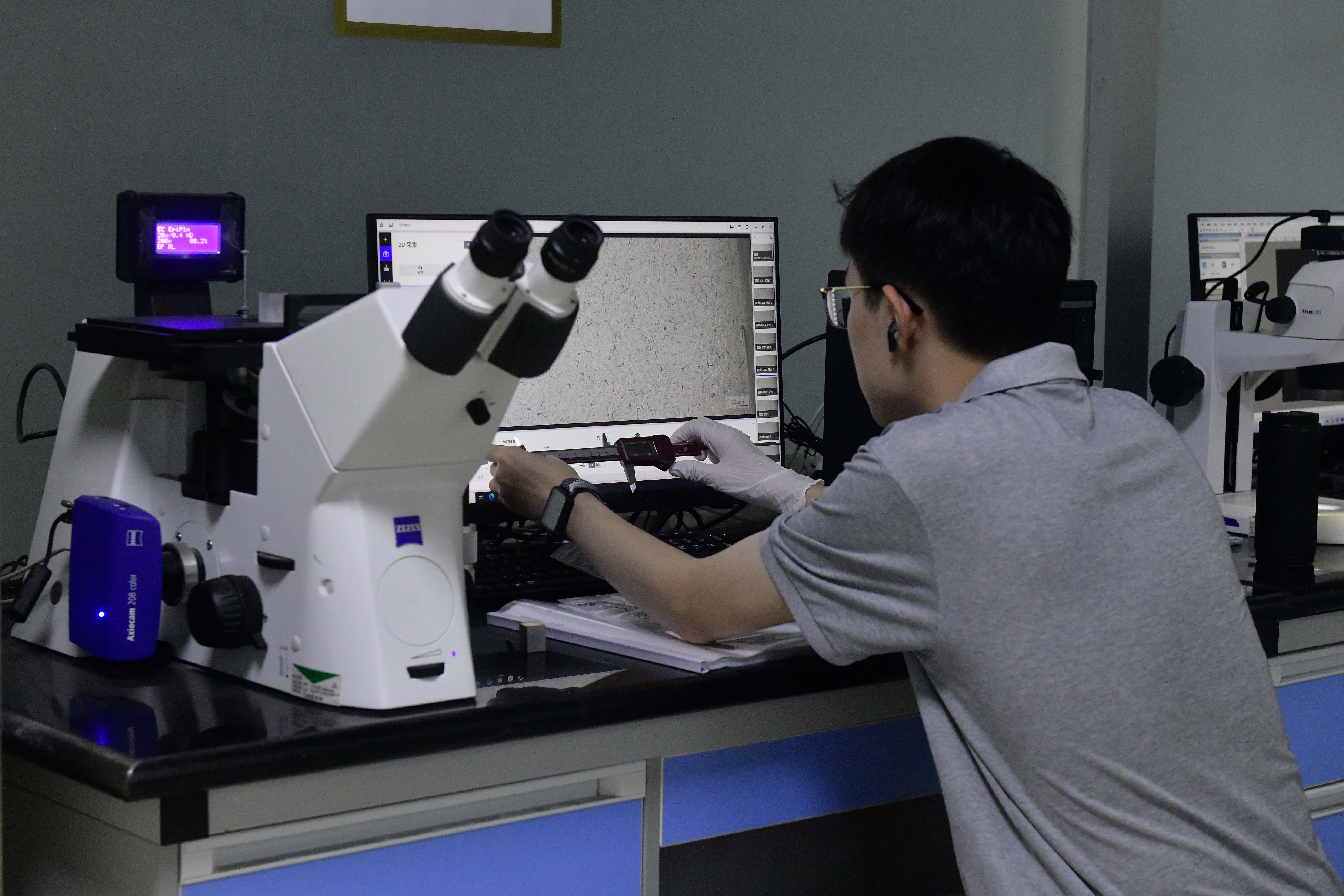
- Require test evidence. Ask for the air tightness, water tightness, wind pressure, thermal and acoustic test records, and confirm that 100% testing applies to your order.
- Specify packaging for ocean transit. Fully sealed moisture-proof packaging plus a pre-shipment corrosion test on finished product protect the grade you paid for during a long sea leg and humid storage.
- Lock commercial terms against the compliance scope. Confirm minimum order quantity, lead time and production capacity so that compliance requirements and delivery schedule are agreed in the same document.
Use Cases: Where This Compliance Envelope Fits
- Coastal residential towers in South America. Salt exposure plus high wind load; specify anodized or coated profiles, wind pressure resistance ≥ Level 6, and a documented corrosion test before shipment.
- Rainy equatorial projects in Africa. Water tightness ≥ Level 4 (≥ 500 Pa) becomes the primary acceptance criterion, supported by sealed moisture-proof packaging for the sea leg and inland transport.
- Plateau and high-wind sites. Wind pressure resistance ≥ Level 6 with a K value ≤ 2.5 W/m²·K to control thermal performance across large temperature swings.
- Green-certified developments. Projects pursuing LEED or 3-Star Green Building recognition need thermal transmittance and acoustic data at the specification stage.
- Automotive and industrial extrusion programmes. Where the end customer is an automotive OEM, IATF 16949:2016 is the entry requirement, and the same plant discipline supports architectural orders placed in parallel.
Comparison: Haomen Window & Door Profiles vs Traditional Architectural Profiles
Haomen's window and door profiles are positioned against traditional architectural aluminum profiles on five factors that a buyer can test at specification, at delivery and in service.
| Decision factor | Haomen window & door aluminum profiles | Traditional architectural aluminum profiles |
|---|---|---|
| Material purity | Over 98.5% | Reference baseline |
| Quality guarantee period | More than 10 years | Reference baseline |
| Relative cost | 10% lower | Reference baseline for comparison |
| Thermal insulation and energy efficiency | Improved, through better thermal insulation and energy-saving performance | Reference baseline |
| Service life and maintenance | Longer usage time | Reference baseline |
| Best-fit application | Windows and doors | Windows and doors |
The Haomen column reflects the manufacturer's stated comparison against traditional architecture aluminum profiles for window and door. The traditional-profile column is shown as a reference baseline rather than as independently verified performance data.
Frequently Asked Questions
Which certifications should a buyer in South America or Africa verify before placing an aluminum profile order?
Verify four management-system certificates: IATF 16949:2016, ISO 9001, ISO 14001 and ISO 45001. Haomen Aluminum holds all four. Check that the certificate scope covers aluminium alloy profile production, that the certificate is within its validity period, and that the issuing body is accredited. IATF 16949:2016 is the automotive quality management standard and is a mandatory requirement for suppliers providing aluminum components such as crash-management systems and structural frames to major automotive OEMs, so its presence indicates process discipline beyond a basic quality system. Note that management-system certificates do not state air tightness, water tightness, wind pressure or K values — those must be requested separately as product test data.
Can one supplier cover both architectural window and door profiles and automotive-grade extrusion?
Yes, when the plant is built for both. Haomen Aluminum was founded in 2004 and integrates research and development, design, production and sales of aluminium alloy architectural profiles and industrial materials, with developed capabilities in automotive lightweighting supported by advanced melting and casting, extrusion technology and complete testing equipment. The company operates a 270,000 m² facility with approximately 1,500 employees and a 35-engineer R&D team, established a Shandong Provincial Technology Research Center in 2019, and cooperates with the Light Alloy Precision Forming Engineering Technology Research and Development Center of Shanghai Jiao Tong University, Shandong University and the Beijing Research Institute of Nonferrous Metals. That combination is what allows one quality system to serve both automotive and architectural orders.
What drives the cost of a compliant aluminum profile order?
Cost is driven mainly by raw-material purity, the finish system, testing scope and order volume. Haomen's window and door profiles are positioned at 10% lower cost than traditional architectural aluminum profiles, with material purity over 98.5% and a quality guarantee period of more than 10 years. The minimum order quantity is 5 tons. For total cost of ownership, purity and finish matter more than unit price: higher-purity material combined with anodizing or coating protection extends service life and reduces replacement and maintenance cost over the life of a building.
How can a buyer validate a profile specification before full production?
Validate on three fronts. First, request the air tightness, water tightness, wind pressure, thermal and acoustic test records for the specific series you intend to buy, so the values can be checked against GB/T 7106, GB/T 8484 and JG/T 215. Second, request a physical sample in the finish you intend to specify, and confirm the alloy and temper, the finish system (for example anodizing, powder coating, electrophoresis, fluorocarbon coating, wood grain transfer or mill finish), and the packaging specification. Third, confirm the corrosion-control sequence: Haomen applies 100% testing and performs a finished-product corrosion test before shipment, so test records travel with the order.
What production capacity and lead time should a buyer expect?
Haomen Aluminum operates a 270,000 m² facility with a 100,000-ton annual capacity and a monthly output capacity of 8,000 tons, and quotes a 20-day lead time against a 5-ton minimum order. Because capacity and schedule depend on the production slot at the time of order, lead time should be confirmed in writing alongside the compliance scope. To start, request a quotation and the relevant compliance documentation for your project's performance grades.
Conclusion
Compliance for aluminum profile procurement in South America and Africa resolves into two questions that must be answered separately. Is the factory managed under recognised systems — IATF 16949:2016, ISO 9001, ISO 14001 and ISO 45001? And does the profile itself meet a defined, testable performance grade — air tightness ≥ Level 6, water tightness ≥ Level 4 (≥ 500 Pa), wind pressure resistance ≥ Level 6, a K value ≤ 2.5 W/m²·K and sound insulation ≥ 30 dB under GB/T 7106, GB/T 8484 and JG/T 215?
A supplier that can evidence both layers — and that controls raw-material purity, anodizing, packaging and pre-shipment corrosion testing — removes most of the risk that a compliant-looking order fails in service. Haomen Aluminum operates a 270,000 m² facility with 100,000-ton annual capacity, exports with a focus on South America and Africa, and supports projects from specification through to delivery documentation.
Next Step: Request a Compliance Dossier, Sample or Quotation
Send your project's performance grades, alloy and finish requirements, and destination market. Haomen Aluminum will return a specification-matched quotation, the relevant test documentation, and sample arrangements where a physical evaluation is required.
- Download the full product catalog: E-Catalog of Shandong Haomen Aluminio (PDF)
- Website: www.haomenly.com
- Email: haomen2004@gmail.com
- Tel / WhatsApp: +86 15153910991 — Chat on WhatsApp
- Address: Ceshan Industrial Park, Linyi City, Shandong Province, China
Have Questions or Need More Details?
Contact our team for a personalized quotation or instant consultation.
Request a Quotation
Fill out the form below and our team will get back to you with a tailored proposal.
WhatsApp Direct Chat
Prefer to chat in real-time? Message us on WhatsApp for instant assistance & quick answers.
- Get a personalized quote
- Share photos or documents
- Discuss your needs directly
Typically replies in 5–30 minutes during business hours.