Aluminum Profile Compliance Map: GB/T 7106, LEED, and ISO Certifications Explained
Aluminum profile compliance is not one certificate. It is a stack of documents that answer different questions: whether the alloy and temper meet a product standard, whether the window system passed air, water, and wind tests, whether the factory's management system is certified, and whether a building can claim a green rating. Buyers who treat these documents as interchangeable often approve a supplier on the strength of an ISO 9001 certificate and later find that the product test report does not cover the profile they ordered.
Haomen Aluminum is an aluminum profile manufacturer based in Linyi City, Shandong Province, China, with a 270,000 m² production site and a published annual output of 100,000 tons. Its product range includes architectural aluminum profiles for doors and windows, and its export markets include the United States, Canada, Australia, Brazil, Argentina, Russia, Germany, and Spain. This article separates the document types, walks through the HM-U001/HM-U002 sliding window compliance set, and provides a buyer checklist for matching documentation to the destination market.
Why a Compliance Map Matters More Than a Single Certificate
A single certificate can create a false sense of completeness. Four document families are involved in architectural aluminum profile procurement, and each one answers a different buyer question.
- Product standards define material, dimensional, or performance requirements. Examples include GB/T 5237.1–.6, GB/T 7106, JG/T 215, GB/T 8484, EN 755-1/-2/-9, and ASTM B221.
- Test method standards define how a property is measured. ISO 9227 covers salt spray tests, and ISO 2409 covers the cross-cut adhesion test.
- Factory management system certifications audit how a plant manages quality, environment, safety, or automotive supply. ISO 9001:2015, ISO 14001, ISO 45001, and IATF 16949:2016 belong to this group.
- Voluntary quality marks and green building ratings include QUALICOAT, QUALANOD, AAMA 2605, AAMA 611, LEED, and 3-Star Green Building. They are project or market tools, not the same kind of document as a product standard.
The practical risk is category confusion. ISO 9001:2015 is a quality management system standard. It can confirm that a factory operates a certified quality system; it does not confirm that a particular profile reaches a stated air tightness level. AAMA 2605 is a voluntary product performance specification for high-performance organic coatings in North America; it is not a factory management certificate. LEED is a building-level green building rating system; it is not a product label. IATF 16949:2016 is an automotive quality management system standard; it is not a substitute for a product test report. Buyers need the right document for the right question.
What the HM-U001/HM-U002 Sliding Window Compliance Set Covers
The manufacturer states that the HM-U001/HM-U002 sliding window set is fully compliant with four Chinese national standards: GB/T 13326, GB/T 7106, JG/T 215, and GB/T 8484. According to the product documentation, this set covers general specifications, air and water tightness, wind resistance, and thermal performance. The three-performance test package refers to air tightness, water tightness, and wind resistance. These are the tests that buyers in coastal, plateau, and rainy regions usually examine first because they connect directly to long-term safety and energy use.
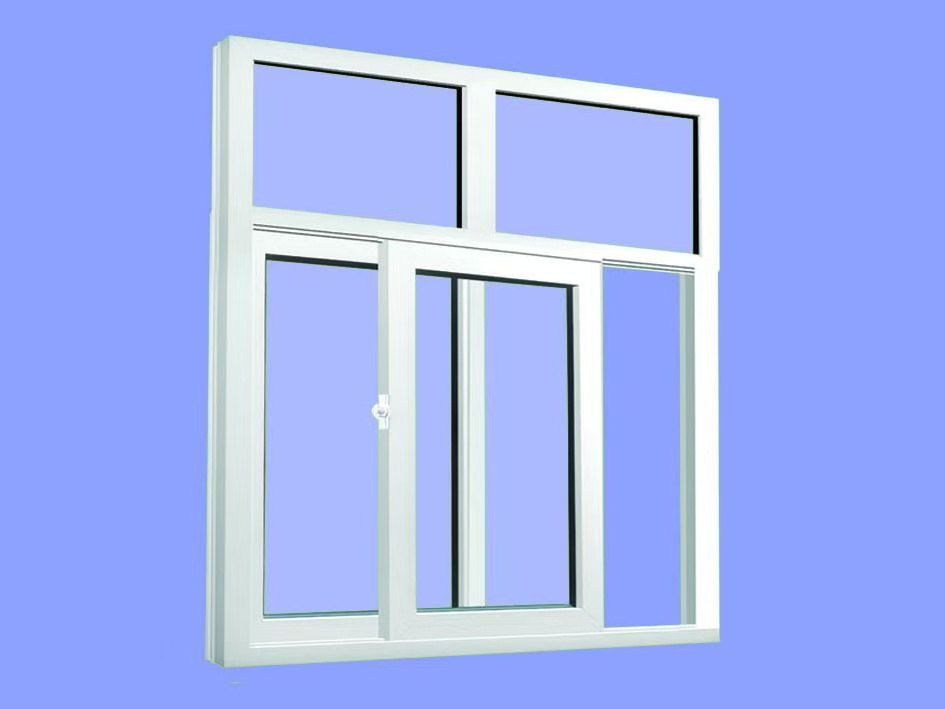
The thermal performance claim is stated as certified per GB/T 8484-2020. The manufacturer also states that the sliding window set supports green building certification, including LEED and 3-Star Green Building. That statement should be read carefully: the product's certified thermal performance can support a building's energy strategy, but the green rating is awarded to the building project, not to the aluminum profile itself. The next sections explain how to read the supporting documents and where the boundaries sit.
How to Read Each Document in the Compliance Stack
Product standards: GB/T 7106 and the four-standard set
In the HM-U001/HM-U002 set, GB/T 7106 is one of the performance standards that supports the air, water, and wind test documentation. The set also includes GB/T 13326, JG/T 215, and GB/T 8484. The four standards should be requested as a set because they cover different parts of the product claim: general specifications, tightness and wind resistance, and thermal performance. A buyer should ask the supplier to map each standard to the test report that supports it, rather than accept a single summary sheet.
For architectural aluminum profiles more broadly, Chinese building profiles are covered by the GB/T 5237 series, which is divided into six parts: base material, anodized profiles, electrophoretic coating profiles, powder coating profiles, fluorocarbon coating profiles, and thermal-barrier profiles. General industrial profiles are covered by GB/T 6892, while dimensional tolerances are addressed by GB/T 14846. These standards help a buyer separate a building-profile supplier from an industrial or automotive-profile supplier.
Coating and anodizing references
Coating and anodizing standards are often the source of the most expensive misunderstandings. AAMA 2605 is a North American voluntary specification for high-performance organic coatings on aluminum extrusions and panels; AAMA 2604 is a mid-tier specification, and AAMA 2603 is a standard-tier specification. AAMA 611 covers anodized architectural aluminum and classifies minimum film thickness: Class I requires at least 0.7 mil, about 18 μm, and Class II requires at least 0.4 mil, about 10 μm. QUALICOAT and QUALANOD are European-origin quality mark systems for powder coating and anodizing; they work through licensed factories, regular audits, and mandatory sample submission.
These references are not interchangeable. AAMA 2605, QUALICOAT, and GB/T 5237.5 use different test cycles, pass criteria, and compliance mechanisms. A supplier should not present a QUALICOAT licence as if it were an AAMA 2605 test report, and a buyer should not write 'high-performance fluorocarbon coating' without naming the standard, version, class, and testing body. The same logic applies to anodizing: 'anodized' is not a film thickness, and Class II should not be accepted where Class I is specified.
Factory management system certifications
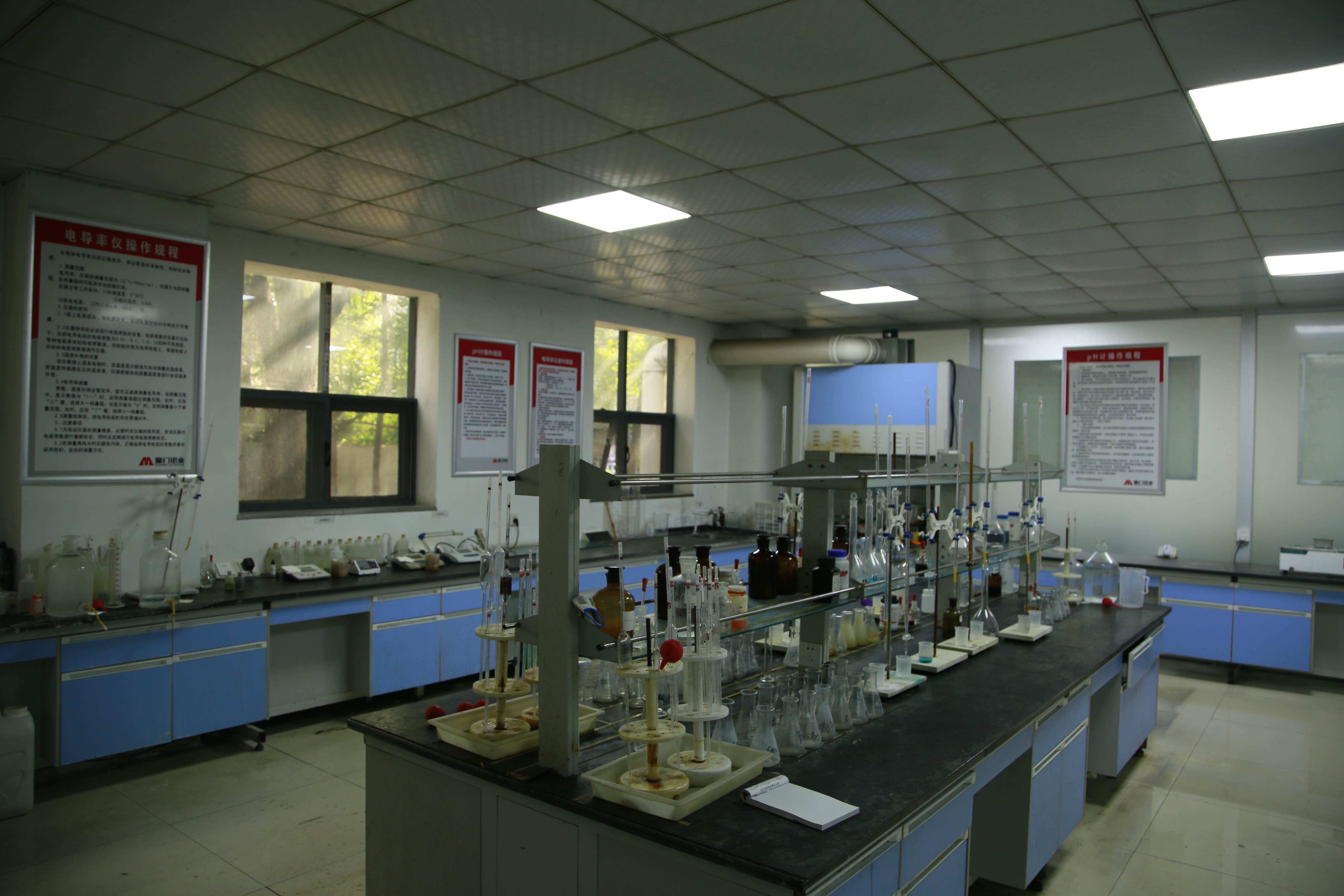
Factory management system certificates answer a different question: whether the production system has been audited against a management standard. Haomen Aluminum holds ISO 9001, ISO 14001, ISO 45001, and IATF 16949:2016 system certifications. The ISO 9001 certificate shown in the company's compliance data is numbered 00226Q03185R501, issued by China Quality Mark Certification Group, and valid from 2026-07-02 to 2029-07-01. Its scope covers production of aluminium alloy profiles for architecture, including anodized, electrophoretic coating, powder coating, and thermal barrier profiles, as well as industrial aluminum profiles, under GB/T 19001-2016 / ISO 9001:2015.
IATF 16949:2016 is the automotive quality management system standard published by the International Automotive Task Force. It replaced ISO/TS 16949 and applies to automotive production and relevant service parts organizations; certification must be carried out by an IATF-recognized certification body. For an automotive aluminum extrusion buyer, IATF 16949:2016 is a qualification gate, not a product performance document. ISO 14001 addresses environmental management, and ISO 45001 addresses occupational health and safety management. All three are factory-system credentials. They do not replace a product test report for GB/T 7106, GB/T 8484, ASTM B221, or any other product standard.
Air Tightness, Water Tightness, and Wind Resistance: A Step-by-Step Reading
The three-performance package is easy to summarize and easy to misread. Use the following sequence when reviewing a supplier's report.
- Confirm the standard and version. For the HM-U001/HM-U002 set, start with GB/T 7106 and the four-standard set. For other markets, start with the product standard named in the project specification.
- Match the specimen. A test report belongs to a specific profile series, alloy and temper, surface treatment, glass thickness, opening type, and window size. A report for one configuration does not automatically cover every size in a catalogue.
- Read air tightness. This is the resistance to air leakage through closed joints and openings. It matters for energy use, condensation risk, and green building performance.
- Read water tightness. This is the resistance to rainwater penetration under specified pressure. It is especially relevant for coastal, rainy, and high-wind projects.
- Read wind resistance. This is the structural performance of the window under wind load. It matters for high-rise, plateau, and exposed sites.
- Check the report details. Look for the test standard, specimen description, test pressure or level, laboratory, date, and conclusion. If any of these are missing, ask for the full report rather than a certificate-style summary.
The buyer's goal is not to collect the largest number of documents. It is to make sure the document set matches the actual order. A compliance folder that cannot be linked to the ordered profile is a folder of general claims.
LEED and 3-Star Green Building: What the Product Can and Cannot Claim
LEED is a building-level green building rating system, and 3-Star Green Building is a building-level green building rating in China. Neither is a product certificate for an aluminum profile. The relevant product contribution is thermal performance. The HM-U001/HM-U002 sliding window set is stated to have thermal performance certified per GB/T 8484-2020, and the manufacturer states that the product supports green building certification, including LEED and 3-Star Green Building. That support is real only when the certified thermal values match the project's window configuration and when the building design, glazing, installation, and commissioning are consistent with the energy model.
For a buyer, the practical request is a thermal performance report for the exact window system, not a general statement that the product is green. Check the report standard, the specimen, the thermal value, and the project application. Then pass the report to the project's energy consultant. The final green rating depends on the whole building, not on one material.
Market-by-Market Compliance Map for Architectural Aluminum Profiles
The table below is a buyer's document map, not a statement that every destination market legally requires every item. In practice, the project specification controls. The map shows the standards and certificates that buyers commonly request, and the checks that prevent category confusion.
| Destination market | Product-standard references buyers commonly cite | Coating and anodizing references | Factory-system evidence to request | Additional buyer check |
|---|---|---|---|---|
| China | GB/T 5237.1–.6 for building profiles; GB/T 6892 for general industrial profiles; GB/T 14846 for dimensional tolerances; the HM-U001/HM-U002 set: GB/T 13326, GB/T 7106, JG/T 215, GB/T 8484. | GB/T 5237.2 anodizing, .3 electrophoresis, .4 powder coating, .5 fluorocarbon coating, .6 thermal barrier; ISO 9227 and ISO 2409 as test methods. | ISO 9001 certificate 00226Q03185R501, valid 2026-07-02 to 2029-07-01; ISO 14001; ISO 45001; IATF 16949:2016 where automotive supply is involved. | Verify that the test report covers the ordered profile, alloy and temper, surface treatment, and window configuration. |
| European Union, including Germany and Spain | EN 755-1/-2/-9; EN 573-3; EN 12020-1/-2 for 6060 and 6063 precision profiles. | QUALICOAT for powder coating and QUALANOD for anodizing; AAMA 2605 or AAMA 611 may appear in project specifications but are not equivalent to QUALICOAT. | ISO 9001; ISO 14001; ISO 45001; IATF 16949:2016 where automotive supply is involved. | Confirm the standard number, version, class, and testing body. An EU anti-dumping measure on aluminum extrusions from China is in force. |
| United States and Canada | ASTM B221; AAMA 2603, 2604, and 2605 for organic coatings; AAMA 611 for anodizing. | AAMA 2603, 2604, or 2605; AAMA 611 Class I or Class II anodic film thickness. | ISO 9001; IATF 16949:2016 for automotive supply; ISO 14001 and ISO 45001. | For US imports, anti-dumping and countervailing duty cases A-570-967 and C-570-968 apply to aluminum extrusions from China; confirm current rates in the Federal Register. |
| Australia, Brazil, Argentina, Russia | The project specification controls. Ask the supplier to state the standard named in the specification and provide a test report for the actual profile. | The project specification should name the coating or anodizing standard and class; do not accept a generic finish description. | ISO 9001; IATF 16949:2016 where automotive supply is involved; ISO 14001 and ISO 45001. | For Brazil, Haomen cites an OEM window and door manufacturer case with 2,000 tons supplied over 10 years and stable operation. Verify current documents for your order. Use HS 7604 for customs classification. |
| Global automotive supply | Customer drawings and IATF 16949:2016 quality management requirements; ISO 9227 and ISO 2409 as test methods where specified. | The customer specification controls the coating or anodizing requirement. | IATF 16949:2016 certificate from an IATF-recognized certification body; ISO 9001. | IATF 16949:2016 is a qualification gate for automotive supply; ISO 9001 alone is not a substitute. |
Buyer Checklist: Match Documentation to Your Destination Market
- Lock the project standard before quotation. For a Chinese sliding window project, list GB/T 13326, GB/T 7106, JG/T 215, and GB/T 8484. For a European project, list the applicable EN 755 parts and EN 573-3. For a North American project, list ASTM B221 and the applicable AAMA coating or anodizing specification.
- Request product reports for the actual profile. Check the profile series, alloy and temper, surface treatment, glass thickness, opening type, and window size. Test reports are specimen-specific.
- Keep factory certificates separate from product reports. Verify the ISO 9001 certificate number, issuing body, validity, and scope. For example, certificate 00226Q03185R501 is valid from 2026-07-02 to 2029-07-01 and covers architectural and industrial aluminum profiles. For automotive projects, require an IATF 16949:2016 certificate from an IATF-recognized certification body.
- Name the coating or anodizing class. AAMA 611 Class I requires at least 18 μm, and Class II requires at least 10 μm. AAMA 2605, 2604, and 2603 are different performance levels. QUALICOAT and QUALANOD are factory-licence systems. GB/T 5237.2–.5 are Chinese product standards. Do not write 'powder coated' without a standard and class.
- For LEED or 3-Star Green Building targets, request the thermal report. Ask for thermal performance certified per GB/T 8484-2020 and confirm that the report matches the project configuration. Treat LEED and 3-Star Green Building as building-level ratings, not product certificates.
- Put trade remedies into the landed-cost model. For the United States, the AD/CVD cases A-570-967 and C-570-968 exist for aluminum extrusions from China. For the EU, an anti-dumping measure is in force. Specific rates must come from official notices.
- Use the correct customs heading. Aluminum bars, rods, and profiles are classified under HS 7604, with 7604.10 for non-alloy aluminum, 7604.21 for aluminum alloy hollow profiles, and 7604.29 for other aluminum alloy profiles.
- Verify the supplier's capability against the order. Haomen's published capability includes 8,000 tons monthly capacity, a 20-day lead time, a 5-ton MOQ, 100% testing, and remote after-sales support. These facts help a buyer plan a sample and production schedule, but they do not replace project-specific test reports.
Frequently Asked Questions
What does GB/T 7106 cover in the HM-U001/HM-U002 sliding window set?
GB/T 7106 is one of the four standards in the set, alongside GB/T 13326, JG/T 215, and GB/T 8484. The manufacturer states that the set covers general specifications, air and water tightness, wind resistance, and thermal performance. The three-performance test package refers to air tightness, water tightness, and wind resistance. Ask for the test report that maps each standard to the ordered profile.
Does an ISO 9001 certificate prove that a profile meets GB/T 7106?
No. ISO 9001:2015 is a quality management system standard. Haomen's certificate, number 00226Q03185R501, is valid from 2026-07-02 to 2029-07-01 and covers production of aluminium alloy profiles for architecture and industrial aluminum profiles. It confirms a certified quality system, not a product's air, water, or wind performance. Buyers still need the product test report for the specific profile.
What does IATF 16949:2016 mean for an aluminum profile buyer?
IATF 16949:2016 is the automotive quality management system standard published by the IATF. It replaced ISO/TS 16949 and applies to automotive production and relevant service parts organizations; certification must be by an IATF-recognized certification body. For automotive projects, it is commonly a qualification gate. Haomen holds IATF 16949:2016, ISO 9001, ISO 14001, and ISO 45001 system certifications.
Can a sliding window help a project obtain LEED or 3-Star Green Building certification?
It can support the building's energy strategy if the thermal performance is certified per GB/T 8484-2020 and the certified values match the project configuration. LEED and 3-Star Green Building are building-level ratings, not product certificates. The final rating depends on the whole building design, glazing, installation, commissioning, and verification. Request the thermal report and pass it to the project's energy consultant.
Are AAMA 2605, QUALICOAT, and GB/T 5237.5 equivalent coating standards?
No. They use different test cycles, pass criteria, and compliance mechanisms. AAMA 2605 is a North American voluntary product performance specification; QUALICOAT is a factory-licence quality mark system for powder coating; GB/T 5237.5 is a Chinese product standard for fluorocarbon coating profiles. Do not treat one as a substitute for another. Name the standard, version, class, and testing body in the purchase specification.
What documents should I request for a US or EU export project?
Start with the product standard named in the project specification, then request the test reports for the actual profile, alloy and temper, surface treatment, and window configuration. Request the ISO 9001 certificate with number, scope, and validity, and the IATF 16949:2016 certificate where automotive supply is involved. For the United States, note that anti-dumping and countervailing duty cases A-570-967 and C-570-968 apply to aluminum extrusions from China; specific rates must be confirmed in the Federal Register. For the EU, an anti-dumping measure on aluminum extrusions from China is in force. Also confirm HS 7604 classification for customs.
How do I verify that a certificate covers my order?
Check the certificate scope, the legal entity, the certificate number, the issuing body, and the expiry date. For product reports, check the specimen description, alloy and temper, surface treatment, test standard and version, laboratory, date, and conclusion. A certificate that cannot be linked to the ordered profile is not enough. For OEM projects, Haomen's published capability includes 8,000 tons monthly capacity, a 20-day lead time, a 5-ton MOQ, and 100% testing; verify these capability facts against the specific order, not assumed from a brochure. To discuss a sample or a quote, contact Haomen Aluminum through the contact details provided with the catalogue.
Conclusion: Build the File, Not the Logo Wall
For buyers sourcing architectural aluminum profiles, the practical rule is simple: separate the document families, match each document to the destination market and project specification, and verify that every report covers the ordered profile. The HM-U001/HM-U002 sliding window set provides a clear starting point for the Chinese standard set, and Haomen Aluminum's factory-system certificates provide the management-system layer. Neither layer replaces the other.
Haomen Aluminum supplies architectural and industrial aluminum profiles from its 270,000 m² facility in Linyi, Shandong, with a published annual output of 100,000 tons. Its export footprint includes the United States, Canada, Australia, Brazil, Argentina, Russia, Germany, and Spain. For a project-specific document review or a sample request, use the company's contact channel or download the catalogue: E-Catalog of Shandong Haomen Aluminio.
Have Questions or Need More Details?
Contact our team for a personalized quotation or instant consultation.
Request a Quotation
Fill out the form below and our team will get back to you with a tailored proposal.
WhatsApp Direct Chat
Prefer to chat in real-time? Message us on WhatsApp for instant assistance & quick answers.
- Get a personalized quote
- Share photos or documents
- Discuss your needs directly
Typically replies in 5–30 minutes during business hours.