
How to Select the Right Aluminum Profiles for Coastal, High-Rise and High-Humidity Projects
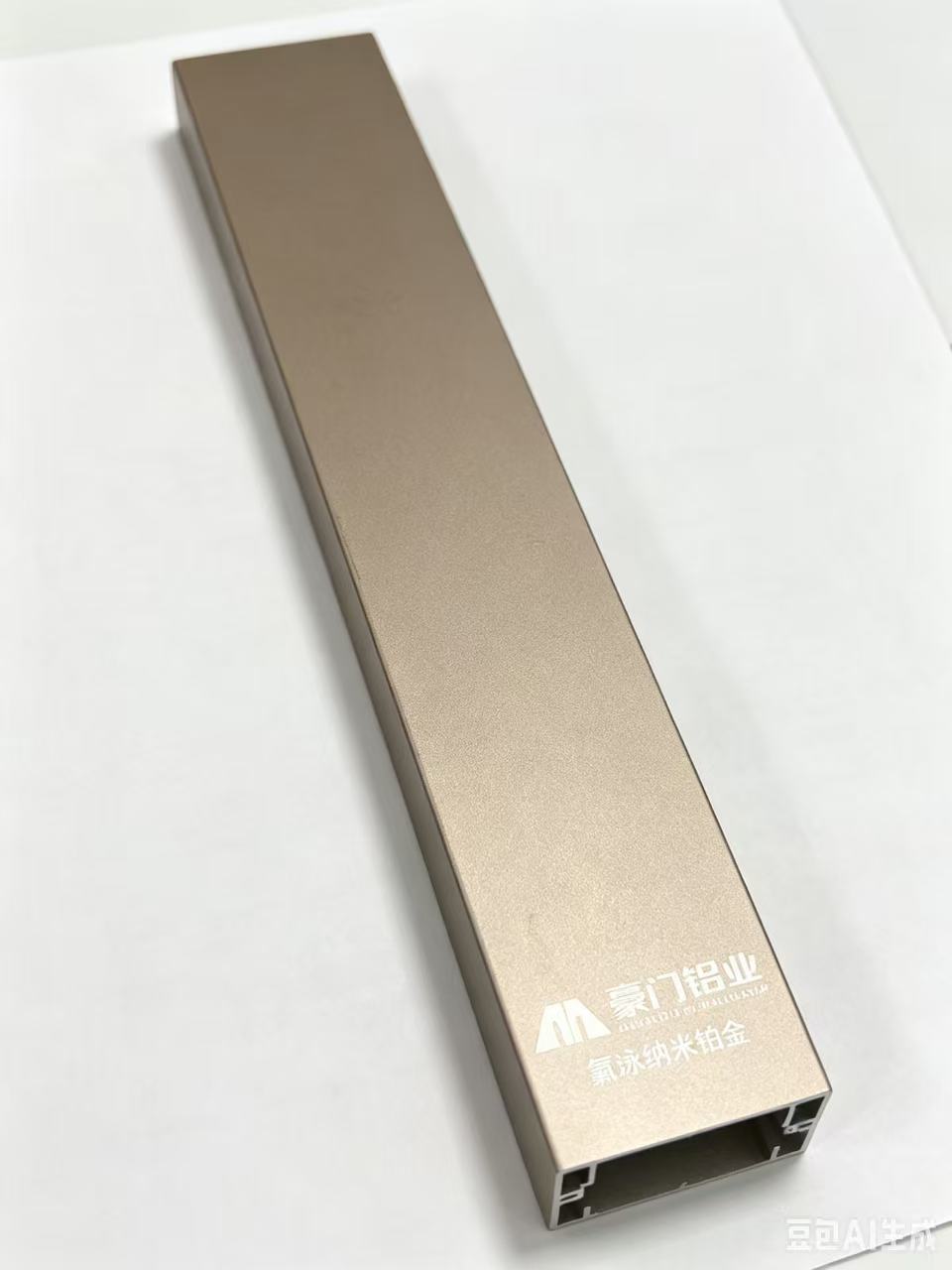
Anodized aluminum profiles in a champagne finish are commonly selected for architectural projects that need both durability and a refined appearance.
Choosing aluminum profiles for doors, windows, curtain walls, fences, and structural frames becomes a high-stakes decision when the project is exposed to coastal salt air, high humidity, strong winds, or large temperature swings. This guide explains what to evaluate when selecting architectural aluminum profiles for demanding environments, how to compare alloys and surface finishes, and why project-specific factors such as installation, hardware compatibility, and long-term maintenance should be part of the buying decision.
What Makes an Architectural Project “Demanding” for Aluminum Profiles?
Architectural aluminum profiles used in doors and windows act as a load-bearing structural framework while providing heat insulation, sound insulation, anti-aging performance, and decorative aesthetic functions. In a demanding project, the profile system must also survive repeated outdoor temperature and humidity cycles, resist corrosion, and maintain its dimensional and sealing performance over many years.
Demanding conditions typically include:
- Coastal environments: Salt-laden air accelerates surface corrosion, making finish quality and alloy selection critical.
- High-humidity regions: Rain, condensation, and moisture intrusion test water tightness, drainage design, and sealing details.
- High-rise buildings: Wind pressure resistance, structural strength, and deflection limits become more important as building height increases.
- Large seasonal temperature changes: Thermal movement can affect joints, hardware, and the long-term stability of the frame.
- Energy-efficiency requirements: Projects targeting green building certification often require documented thermal performance.
For procurement and engineering teams, the practical question is not only “which aluminum profile is strong enough” but also “which profile system will remain reliable over the full service life of the building.”
Key Selection Criteria for Architectural Aluminum Profiles in Tough Environments
When evaluating suppliers and product systems, the following criteria tend to carry the most weight in real projects:
1. Alloy Selection
For architectural doors and windows, 6063-T5 is a widely used alloy because it offers a good balance of strength, corrosion resistance, surface finish quality, and extrudability. Projects that require a different balance of mechanical properties may consider 6061, 6005, or 6082 alloys. A supplier able to offer 6063-T5, 6061, 6005, and 6082 provides more flexibility for structural and high-strength applications.
2. Surface Finish
The surface treatment determines both appearance and long-term weather resistance. Common options for architectural profiles include:
- Mill finish: The natural surface after extrusion, with no additional coating. Suitable for interior or non-visible parts, or where another coating will be applied later.
- Anodizing: An electrochemical process that creates a protective oxide layer. Available in finishes such as silver matte and champagne. Anodized profiles are valued for their uniform appearance and resistance to weathering.
- Powder coating: A durable, color-flexible coating applied to the profile surface. Powder-coated profiles are common in door and window systems where color consistency and scratch resistance matter.
- Wood grain transfer: A decorative finish that mimics natural wood texture while retaining the structural properties of aluminum.
- Electrophoresis: A coating process used to achieve a smooth, corrosion-resistant film, often over an anodized or pre-treated surface.
- Fluorocarbon coating: A high-performance coating option often specified for curtain walls and building exteriors that require excellent weather resistance and color retention.
For coastal projects, the combination of alloy quality and a well-applied protective finish is usually more important than choosing the most expensive option.
3. Structural and Performance Parameters
Project specifications often include minimum levels for air tightness, water tightness, wind pressure resistance, sound insulation, and thermal insulation. These values should be checked against the profile system design and the documented test results provided by the manufacturer.
4. Hardware and Installation Compatibility
Architectural profiles do not work alone. Door and window systems must be assembled with glass, screws, gaskets, rollers, locks, and other hardware. A well-designed profile system should be compatible with standard hardware dimensions and designed for efficient installation. Mismatches between profile tolerances and hardware specifications can lead to on-site delays, air and water leaks, or premature wear.
5. Supplier Capability and Long-Term Support
For overseas buyers, supplier stability matters as much as the product specification. A manufacturer’s production capacity, export experience, lead times, quality control processes, and after-sales support all affect the overall project risk.
Comparing Aluminum Profile Alloys and Surface Treatments
The table below summarizes the most common alloy and finish options for architectural aluminum profiles and the types of projects where each is typically used.
| Option | Typical Use | Key Consideration |
|---|---|---|
| 6063-T5 alloy | Window and door profiles, decorative architectural sections | Good extrudability, good surface finish, widely specified for architectural applications |
| 6061 / 6005 / 6082 alloys | Higher-strength structural applications | Selected when mechanical strength requirements exceed the capability of 6063-T5 |
| Mill finish | Non-visible parts, secondary processing, cost-sensitive applications | No additional protective layer; not recommended for exposed exterior use without further coating |
| Anodizing (silver matte, champagne, etc.) | Exterior and interior profiles with an even metallic appearance | Creates a protective oxide layer; color options are typically more limited than powder coating |
| Powder coating | Doors, windows, fences, and other products requiring color options and durable surfaces | Wide color range; durability depends on pre-treatment and coating quality |
| Wood grain transfer | Interior doors, windows, and decorative profiles | Provides a wood-like appearance; durability depends on the base finish and sealing |
| Electrophoresis | Profiles requiring a smooth, corrosion-resistant surface | Often used with an anodized base for enhanced protection |
| Fluorocarbon coated | Curtain walls and high-end exterior architectural façades | High weather resistance and color retention; generally a higher-cost finish |
Because each alloy and finish combination behaves differently under specific climate conditions, buyers should provide full project details when requesting a quotation rather than asking for a single universal recommendation.
Project-Specific Selection: Coastal, High-Rise, Rainy and Energy-Efficient Buildings
Project requirements can be grouped into common scenarios, each with a different selection emphasis.
Coastal Residential and Commercial Buildings
In coastal environments, salt spray is the main enemy. Selection should focus on a corrosion-resistant alloy, a high-quality protective finish, and a drainage system that prevents water from pooling inside the frame. Anodized or powder-coated finishes are often chosen for these conditions. The integrity of corner joints and gaskets also matters because salt-laden moisture can attack weak points over time.
High-Rise Towers and Curtain Walls
High-rise buildings create higher wind loads and more demanding deflection limits. Curtain wall aluminum profiles work as the primary structural frame for the building envelope, so alloy strength, profile geometry, and anchorage details must be engineered accordingly. Fluorocarbon-coated curtain wall profiles are commonly used for exterior façades because of their weather resistance and color stability.
Rainy and High-Humidity Regions
In regions with heavy rain and high humidity, water tightness, air tightness, and internal drainage are the most important performance areas. Sliding door and window systems in these regions must prevent water from being driven into the interior during storms. Profiles with documented water tightness performance and well-designed drainage channels are preferable.
Energy-Efficiency and Green Building Projects
Projects targeting energy performance or green building certification require frames with good thermal insulation. This often means selecting profiles that can accommodate thermal break strips, multi-chamber designs, and appropriate glazing. The buyer should verify whether the profile system has documented thermal performance rather than assuming that all aluminum frames perform equally.
How to Evaluate an Aluminum Profile Manufacturer for a Specific Project
Beyond the product itself, the manufacturer’s ability to deliver consistent quality across a project is a critical risk factor. The following checklist can be used when evaluating suppliers:
- Verify the production base: A manufacturer with a fully integrated process, from melting and casting to extrusion, testing, and surface treatment, can provide better consistency and traceability.
- Check quality standards and certifications: Certifications such as ISO 9001, ISO 14001, ISO 45001, and IATF 16949 indicate that the company follows formal quality, environmental, occupational health and safety, and automotive-grade quality management systems.
- Review the alloy and finish range: A supplier offering 6063-T5, 6061, 6005, and 6082 alloys, with finish options including mill finish, anodizing, powder coating, wood grain transfer, and fluorocarbon coating, is better able to match project-specific requirements.
- Assess production capacity and lead times: For large projects, the supplier must be able to maintain stable supply. Monthly capacity, minimum order quantity, and typical lead time should be agreed on in advance.
- Request performance documentation: For projects with air tightness, water tightness, wind pressure resistance, sound insulation, or thermal insulation requirements, ask for test reports and standards compliance data.
- Ask about export experience and after-sales support: Documentation, packaging, shipping, and remote technical support help ensure that the profiles arrive correctly and can be installed without unnecessary delays.
Step-by-Step Process for Selecting Profiles for a Large Project
The buying process for architectural aluminum profiles usually follows the steps below.
Step 1: Define the Project Requirements
List the building type, location, climate conditions, wind load requirements, energy targets, and design expectations. Include dimensions, opening types, and any special requirements such as anti-collision features.
Step 2: Select the Alloy and Finish
Based on the project conditions, choose the alloy class and surface finish. For exterior projects in coastal areas, prioritize corrosion resistance. For high-rise projects, prioritize strength and wind pressure resistance. For design-driven projects, match the finish to the architectural style.
Step 3: Check Performance Specifications
Compare the profile system’s air tightness, water tightness, wind pressure resistance, sound insulation, and thermal insulation values against the project specification.
Step 4: Review Hardware and Installation Compatibility
Ensure that glass, screws, gaskets, rollers, and locks can be installed within the profile tolerances. Ask whether the supplier provides installation guidance or assembly recommendations.
Step 5: Request Samples and Documentation
Before committing to a large order, request physical samples, finish samples, and written documentation for the proposed alloy, finish, and performance data.
Step 6: Evaluate the Supplier’s Capacity and Support
Review the manufacturer’s production capacity, lead time, quality control process, export experience, and after-sales support. Confirm minimum order quantities and delivery terms.
Step 7: Place a Pilot or Phased Order
For new supplier relationships, consider starting with a pilot order before scaling to full project volume.
Use Cases: Applying These Criteria in Real Projects
Haomen Aluminum has supplied architectural aluminum profiles for door and window applications in a project involving 2,000 tons of profiles. The project involved a window and door manufacturer and has been in stable operation over a ten-year relationship. The long-term use of these profiles in a real installation demonstrates the practical importance of alloy consistency, finish quality, and dimensional accuracy.
For a typical architectural door and window project, the profile system must provide a load-bearing structural framework while achieving heat insulation, sound insulation, anti-aging performance, and decorative aesthetic functions. In a long-term static installation, the profiles must withstand annual outdoor temperature and humidity cycles.
Questions to Ask a Supplier Before Ordering
Buyers who can answer the following questions early in the sourcing process are more likely to select a system that avoids expensive on-site problems.
- Which alloy do you recommend for this project’s structural and environmental requirements, and why?
- Which surface finish is best suited to this climate zone?
- What air tightness, water tightness, wind pressure resistance, sound insulation, and thermal insulation performance does your system achieve?
- What is the production lead time for a project of this size?
- What is the minimum order quantity?
- Can you provide samples and documented quality control evidence before mass production?
- What export experience do you have with projects in my region?
Why Supplier Standardization Matters: Haomen Aluminum at a Glance
Haomen Aluminum, operating through Shandong Haomen Import & Export Co., Ltd. and Shandong Haomen Aluminium Industry Co., Ltd., is a Chinese manufacturer of architectural aluminum profiles and industrial aluminum materials. The company was founded in 2004 and operates from a 270,000 m² facility in the Luozhuang District of Linyi City, Shandong Province, an area known as the “Logistics Capital of China.”
The company’s production base includes melting and casting, extrusion technologies, and complete testing equipment. Its main products include aluminum profiles for windows and doors. The company employs roughly 1,500 people and has an annual output of approximately 100,000 tons. Its R&D and technical team includes around 49 R&D personnel with bachelor’s degrees or above, including one postdoctoral fellow, seven doctors, and three master’s degree holders.
Haomen Aluminum has established cooperative relationships with the Light Alloy Precision Forming Engineering Technology Research and Development Center of Shanghai Jiao Tong University, Shandong University, and the Beijing Research Institute of Nonferrous Metals. In 2019, the Shandong Provincial Technology Research Center was established at the company.
The company holds international system certifications including IATF 16949:2016, ISO 9001, ISO 14001, and ISO 45001. Its export markets include the United States, Canada, Australia, Brazil, Argentina, Russia, Germany, and Spain, in addition to Central and South America and Africa. The company’s monthly production capacity is 8,000 tons, with a typical lead time of 20 days and a minimum order quantity of 5 tons for OEM production. Quality control is described as 100% testing, and after-sales support includes remote support.
Comparison: What to Look For in an Architectural Aluminum Profiles Supplier
Large buyers in the architectural aluminum market often compare Chinese manufacturers against regional suppliers. The table below outlines the factors that are commonly evaluated without making claims about specific competitors.
| Evaluation Factor | Why It Matters | What to Ask |
|---|---|---|
| Production capacity | Determines whether the supplier can support large or repeated orders | What is the monthly capacity? What is the lead time for my order size? |
| Alloy range | Architectural and structural projects require different mechanical properties | Can you supply 6063-T5, 6061, 6005, and 6082 profiles? |
| Finish options | Climate, aesthetics, and maintenance requirements drive finish selection | Can you provide mill finish, anodizing, powder coating, wood grain transfer, electrophoresis, and fluorocarbon coating? |
| Quality certifications | Certifications indicate the level of process control and quality management | Which certifications do you hold (for example, ISO 9001 or IATF 16949)? |
| Export and after-sales | Affects transportation, documentation, regulatory compliance, and problem resolution | Which export markets do you serve? What after-sales support do you provide? |
| Testing and samples | Reduces the risk of performance failures after installation | Can you provide samples, test reports, and quality documentation for this project? |
This comparison approach is designed to help buyers evaluate suppliers on objective, project-relevant factors.
Industry Context for Buyers in 2026
Aluminum extrusion remains a large and growing global industry, driven by construction, transportation, and energy infrastructure. Industry research estimates the global aluminum extrusion market at USD 94.8 billion in 2024, with projections reaching USD 230.2 billion by 2035. China is a major production and export hub for aluminum structures, including profiles and window/door frames. In 2024, China’s exports of aluminum structures totaled USD 5.55 billion, representing about 30.5% of global exports.
For buyers in South America, Africa, and Asia, the practical implication is that Chinese aluminum profile manufacturers are likely to remain a major supply source, making supplier evaluation an ongoing procurement skill.
Frequently Asked Questions
Which aluminum profile alloy is best for windows and doors in coastal environments?
6063-T5 is the most common alloy for aluminum windows and doors because it offers a good balance of strength, corrosion resistance, and finish quality. For projects exposed to salt air and high humidity, the protective surface finish matters as much as the alloy. Anodized and powder-coated finishes are typically selected to provide a durable protective layer. In projects with higher structural requirements, alloys such as 6061, 6005, or 6082 may be specified.
What surface finish should be used for exterior aluminum profiles?
For exterior profiles, the finish should provide weather resistance, corrosion protection, and acceptable long-term appearance. Anodizing creates a protective oxide layer and is available in finishes such as silver matte and champagne. Powder coating offers a wide color range and durable surface performance. For high-end building façades and curtain walls, fluorocarbon coating is often chosen for its weather resistance and color retention. The final choice should match the project climate, design intent, and budget.
Can Haomen Aluminum produce OEM aluminum profiles for window and door manufacturers?
Yes. Haomen Aluminum’s OEM production capabilities include custom logos and a monthly capacity of 8,000 tons. The typical lead time is 20 days, and the minimum order quantity for OEM production is 5 tons. The company performs 100% testing as part of its quality control process and provides remote after-sales support. OEM customers can also access the company’s architectural profile series for windows and doors, with profiles available in 6063-T5, 6061, 6005, and 6082 alloys.
How much does a custom aluminum profile project usually cost?
The total cost depends on the alloy grade, profile cross-section, surface finish, order quantity, packaging, and delivery terms. For OEM orders, the minimum order quantity at Haomen Aluminum is 5 tons. Buyers should request a formal quotation with complete project specifications, including drawings, alloy, finish, quantity, and destination, before assuming a budget. Because surface treatment costs vary by finish type, finish selection has a significant impact on the overall price.
Can I request a sample of Haomen Aluminum profiles before placing a bulk order?
Yes. For architectural projects, physical samples are the most reliable way to verify surface finish, profile dimensions, and overall quality. Request a sample along with the full project specification so that the supplier can recommend the appropriate alloy, finish, and series. This step is particularly important for coastal and high-rise projects where the profile’s long-term performance depends on both the base material and the surface treatment.
For project inquiries, samples, or a quotation, contact Haomen Aluminum directly:
- Contact: Melisa Ying
- Email: haomen2004@gmail.com
- Tel / WhatsApp: +86 15153910991
- Address: Ceshan Industrial Park, Linyi City, Shandong Province, China
Download the Haomen Aluminum e-catalog to review product series, finish options, and company capabilities.
Conclusion
Selecting aluminum profiles for coastal, high-rise, and high-humidity projects requires a clear understanding of the project conditions, the profile alloy, the surface finish, and the performance characteristics of the complete door or window system. Buyers should prioritize corrosion resistance in coastal areas, structural strength in high-rise buildings, and water and air tightness in rainy or humid climates.
A qualified manufacturer brings more than a catalog: production capacity, quality control, export experience, and after-sales support all affect whether a large project is delivered on time and performs reliably for decades. When a profile system performs as a load-bearing structural framework while providing insulation, sound insulation, anti-aging behavior, and architectural aesthetics, it is the result of both good product design and disciplined manufacturing.
For detailed technical specifications or a project-specific recommendation, contact Haomen Aluminum to discuss the alloy, finish, and profile series that fits your building project.
Published: August 11, 2026. Haomen Aluminum | Shandong Haomen Aluminium Industry Co., Ltd.
Have Questions or Need More Details?
Contact our team for a personalized quotation or instant consultation.
Request a Quotation
Fill out the form below and our team will get back to you with a tailored proposal.
WhatsApp Direct Chat
Prefer to chat in real-time? Message us on WhatsApp for instant assistance & quick answers.
- Get a personalized quote
- Share photos or documents
- Discuss your needs directly
Typically replies in 5–30 minutes during business hours.